Our grandmother, whose belly was a star, begat the elements of mother earth, the dust from which all life arose. For four and a half billion years later, gravity has been the same as it was in the beginning, drawing Earth’s children to its center from birth to death. Dust to dust. As Neil deGrasse Tyson puts it in the hit series Cosmos, “Earth pulls on us. Our lives are a relentless struggle with gravity. From our first efforts to stand to our final surrender, we are struggling to overcome the Earth's pull. We are born, live and die in a force field-- one that is almost as old as the universe itself. 13.8 billion years.”
A prison you cannot escape.
Earth pulls on us. Across the world, we kneel, press our foreheads to the ground. We kiss terra firma with gratitude after weeks at sea. Mineral pools bubbling from the planet’s core draw us to their soothing waters, heal our tired bodies. Each night, we upend our centers of gravity, we sleep, momentarily convinced to stop resisting.
But as long as earth pulls on us, we pull on her. Gravity attracts all bodies to one another. When our foreheads bow into the dirt, two global forcefields meet in worship. The forcefield of a human head draws the planet towards itself. We pull on the earth. At 9.81 meters per second squared, earth rises to meet our lips, obeying the unbreakable laws of nature. She dutifully slips her immense hands beneath our tired backs as we snore, each breath taken in relativity to her mass.
We pull on the earth. Digging, weeding, planting trees that defy gravity’s presence. When the forcefields of humans and earth collide, soils turn, roses stretch to the heavens, waves of grain bend in the breeze and then reach again for the sky. Trees bulge with fruit that then falls on the heads of puzzled physicists. A small portion of the sphere becomes our own as we coax up artichokes, hollyhocks, grapes. A garden, a place to co-create and to observe inevitable death.
In The Secret Garden, by Frances Hodgson Burnett, a sickly and rejected girl, Mary, is summoned by her uncle, the wealthy Lord Craven of Yorkshire. As her new guardian, who is unable to give her any real attention or time, he asks her:
“Is there anything you want? Do you want toys, books, dolls?”
“Might I,” quavered Mary, “might I have a bit of earth?”
“Earth!” he repeated. “What do you mean?”
“To plant seeds in–to make things grow–to see them come alive,” Mary faltered.
Her uncle instructs her to take what she wishes, from anywhere, and bids her goodbye. Unwittingly, he gifts her the Secret Garden, the heart and soul of the late Mrs. Craven, her mother’s sister. Mary’s aunt was killed by a falling branch in the very same garden, that bit of earth that was her life and death.
With the door locked and the key buried, the secret garden lay dormant, unloved, sickly, forgotten… not unlike poor Mary. But the laws of nature are constant. Life cycles continue from death to rebirth; the garden is tended by Mary, the act of which, in turn, brings her to life.
In the broadway musical, Lord Craven sings,
She should have a pony, gallop 'cross the moor
She should have a doll's house with a hundred rooms per floor
Why can't she ask for a treasure? Something that money can buy
That won't die, when I'd give her the world, she asks instead for some earth
She'll grow to love
The tender roses, lilies fair, the iris tall
And then in fall, her bit of earth
Will freeze and kill them all
Once we accept that change is inevitable, we realize there is no fixed place in the cosmos. All of nature is in motion. Earth pulls on us, we pull on the earth, seasons generate sprouts and fruit, currents of moisture and wind lay ruin to crops, we struggle on tiny feet to stand, we get old, we fall. But we don’t let gravity get us down. We pull on the earth as it hurdles through space.
Even standing still listening to the birds, Tyson reminds us that “Earth is turning at more than 1,600 kilometers per hour while it orbits the Sun at more than 100,000 kilometers per hour. And the Sun is moving through the galaxy at a half a million miles per hour. And the Milky Way is moving through the universe at nearly one and a half million miles an hour” (Neil deGrasse Tyson). As we walk through deserts, drive across swamps, plant beds of onions, the ground is moving.
When stars of a certain mass die and their fuel begins to run out, they become black holes, bending spacetime. Not even light can escape their incredible gravitational pull. It is thought that at the center of most galaxies, supermassive black holes exist, absorbing stars and merging with other black holes.
When our sun is finally sucked in and becomes timeless, spaceless, perhaps it emerges on the other side in a parallel universe. A universe where life doesn’t end, time and space are constant, light doesn’t bend, gravity barely has a grip. We float free, wandering and wondering whether another kind of life exists beyond us. A life where gardens grow and heal humans and the humans revitalize a bit of earth. Where we are the makers of change rather than those who suffer from it. We pull on the earth, and the earth pulls on us. All is well and in balance forever in our secret garden.
Showing posts with label earth. Show all posts
Showing posts with label earth. Show all posts
Thursday, July 2, 2015

Sunday, June 1, 2014
Earth from Space
For the past year, my television watching has been limited to public stations. No problem... PBS is normally what I choose to watch even though I now have access to satellite TV (a lot of it is mindless garbage in my opinion--even Discovery Channel, The History Channel and TLC have little to offer these days). I get (probably overly) excited, especially, about science programs like NOVA, which airs on PBS. I plan my day so that I will be home when it’s on and have time to take it all in.
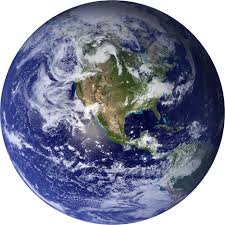
Earth from Space, which aired in June 2013, was a NOVA program that really impacted me. It describes how satellites both give us a view of earth from space and enable us to “see” life-sustaining processes normally invisible to the naked eye. This is made possible by either reading or emitting waves that are outside of the visible spectrum of light. Viewers are able to visualize how the earth’s temperature is regulated by ocean currents, how the Sahara Desert nourishes the Amazon half a world away, how annual ice fluctuations in the arctic create an underwater brine “waterfall,” and the scale of earth’s magnetic field. As this was my first exposure to such knowledge, I was blown away by how our technology has improved our vision and understanding of how our planet supports diverse life in diverse environments.
Here’s an excerpt from the script:
NARRATOR: As a major engine, driving the world’s ocean currents, Antarctica helps protect Earth’s climate from wild swings in temperature. The constant, dependable circulation of the oceans around the globe and the relatively stable temperatures it produces, have made Earth a hospitable planet. Long-term stability provided time for life to flourish and complex animals and plants to evolve. And this is how a process that began with Antarctic ice continues to sustain our world.
Remember learning about the electromagnetic spectrum in high school? Waves of various lengths are arranged from long (radio waves) to short (gamma rays) and visible light is represented by a very small segment of this line. Visualizing the spectrum’s entire length from LA to NY, this visible section would be the size of a dime. There is so much information that our eyes have not adapted to see, but luckily, we have adapted large brains which innovate the technology to read this information in indirect ways.
For example, satellites can help us “see” the inner structure of a hurricane by bouncing microwaves off of raindrops. How neat is that?
On the lower end of the electromagnetic spectrum, just below the visible color red, infrared images detect heat and can measure water vapor rising off the oceans surface, a process marking the beginning of a tropical storm.
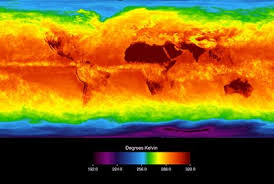
Microwaves emitted by satellites can penetrate through clouds to detect ice year-round. This kind of information is quite valuable for studying climate change over the years.
But the coolest part of the program to me was the precision of measurement some of our technology is capable of, and what it reveals. Using a piece of equipment called Jason, a satellite dedicated to oceanographic data collection, we are able to bounce radar off the surface of the ocean to measure it’s height within millimeters, revealing shape of sea floor. This kind of information reveals processes we never could have imagined, such as a super-colossal underwater “waterfall.” This occurs when water freezes around the South Pole; the salt is ejected because it doesn't freeze, then sinks to the sea floor as it is denser than the surrounding water.

Here is another excerpt from the script:
NARRATOR: Combining data from satellites and undersea instruments, scientists can reconstruct what is happening, hidden beneath the ice. What they learn is astounding. One trillion gallons of salty brine plunge down through the Weddell Sea every hour—a torrent equivalent to the volume of 500 Niagara Falls. The brine spreads out towards the edge of the Antarctic continental shelf and then falls into the chasm revealed by Jason. A vast submarine waterfall plummets downward. The cold, dense brine falls slowly, silently, into the abyss, two miles down to the ocean floor below. It will not resurface for hundreds of years.
Did you catch the number trillion (1,000,000,000,000)? A million is hard to imagine, let alone a billion. Well, a trillion is equal to a million millions, or a thousand billions. So, one trillion gallons of brine tumbling into the chasm per hour. We still don’t know where it goes when it falls, but we are a big step closer to understanding our planet. And this is just one of the many discoveries satellites have made! I cannot do the program justice in a short blog post... please, go watch it yourself! For me at least, there is little more thrilling or breathtaking than getting a glimpse at what is happening just beyond the horizon of our understanding.
It's about 2 hours, but worth the watch.
Earth from Space, which aired in June 2013, was a NOVA program that really impacted me. It describes how satellites both give us a view of earth from space and enable us to “see” life-sustaining processes normally invisible to the naked eye. This is made possible by either reading or emitting waves that are outside of the visible spectrum of light. Viewers are able to visualize how the earth’s temperature is regulated by ocean currents, how the Sahara Desert nourishes the Amazon half a world away, how annual ice fluctuations in the arctic create an underwater brine “waterfall,” and the scale of earth’s magnetic field. As this was my first exposure to such knowledge, I was blown away by how our technology has improved our vision and understanding of how our planet supports diverse life in diverse environments.
Here’s an excerpt from the script:
NARRATOR: As a major engine, driving the world’s ocean currents, Antarctica helps protect Earth’s climate from wild swings in temperature. The constant, dependable circulation of the oceans around the globe and the relatively stable temperatures it produces, have made Earth a hospitable planet. Long-term stability provided time for life to flourish and complex animals and plants to evolve. And this is how a process that began with Antarctic ice continues to sustain our world.
Remember learning about the electromagnetic spectrum in high school? Waves of various lengths are arranged from long (radio waves) to short (gamma rays) and visible light is represented by a very small segment of this line. Visualizing the spectrum’s entire length from LA to NY, this visible section would be the size of a dime. There is so much information that our eyes have not adapted to see, but luckily, we have adapted large brains which innovate the technology to read this information in indirect ways.
For example, satellites can help us “see” the inner structure of a hurricane by bouncing microwaves off of raindrops. How neat is that?
On the lower end of the electromagnetic spectrum, just below the visible color red, infrared images detect heat and can measure water vapor rising off the oceans surface, a process marking the beginning of a tropical storm.
Microwaves emitted by satellites can penetrate through clouds to detect ice year-round. This kind of information is quite valuable for studying climate change over the years.
But the coolest part of the program to me was the precision of measurement some of our technology is capable of, and what it reveals. Using a piece of equipment called Jason, a satellite dedicated to oceanographic data collection, we are able to bounce radar off the surface of the ocean to measure it’s height within millimeters, revealing shape of sea floor. This kind of information reveals processes we never could have imagined, such as a super-colossal underwater “waterfall.” This occurs when water freezes around the South Pole; the salt is ejected because it doesn't freeze, then sinks to the sea floor as it is denser than the surrounding water.
Here is another excerpt from the script:
NARRATOR: Combining data from satellites and undersea instruments, scientists can reconstruct what is happening, hidden beneath the ice. What they learn is astounding. One trillion gallons of salty brine plunge down through the Weddell Sea every hour—a torrent equivalent to the volume of 500 Niagara Falls. The brine spreads out towards the edge of the Antarctic continental shelf and then falls into the chasm revealed by Jason. A vast submarine waterfall plummets downward. The cold, dense brine falls slowly, silently, into the abyss, two miles down to the ocean floor below. It will not resurface for hundreds of years.
Did you catch the number trillion (1,000,000,000,000)? A million is hard to imagine, let alone a billion. Well, a trillion is equal to a million millions, or a thousand billions. So, one trillion gallons of brine tumbling into the chasm per hour. We still don’t know where it goes when it falls, but we are a big step closer to understanding our planet. And this is just one of the many discoveries satellites have made! I cannot do the program justice in a short blog post... please, go watch it yourself! For me at least, there is little more thrilling or breathtaking than getting a glimpse at what is happening just beyond the horizon of our understanding.
It's about 2 hours, but worth the watch.
Subscribe to:
Posts (Atom)